BIOLAB + FAUL

Laboratory Practices with
Bio-Materials
Workshop Modules
1. Introduction to Bio-Materials Research
Prof. José Nuno Beirão (FAUL-CIAUD), Prof. Ana Mestre (FBAUL/DE), Architect Rafael Calado (BioLab Lisboa) and PhD Tarciana Andrade
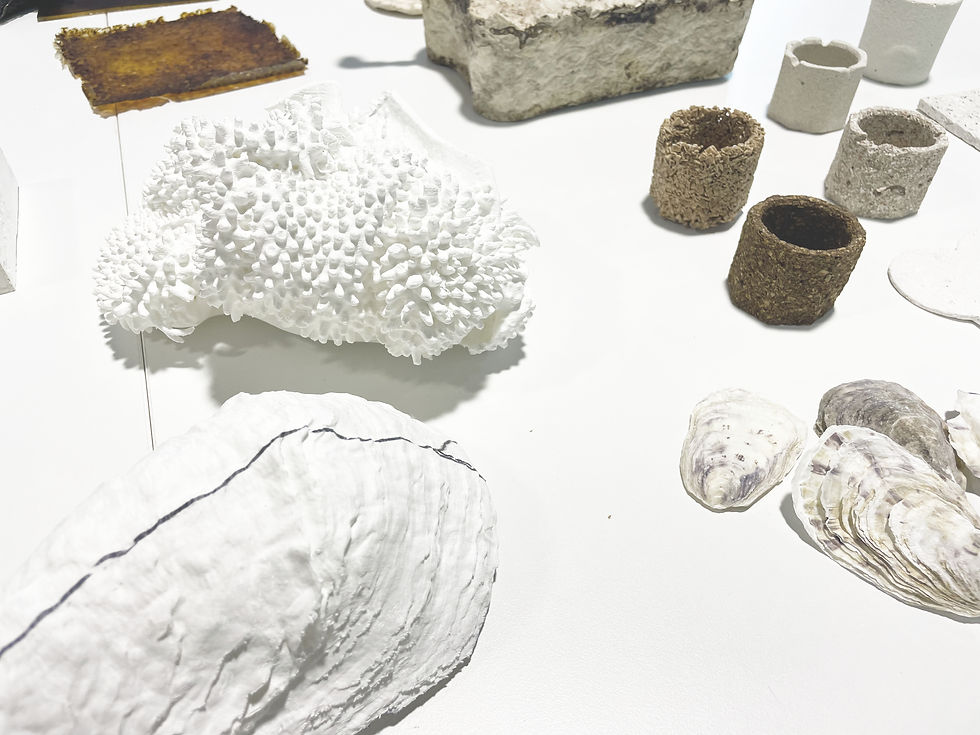
This module introduces bio-materials research, circular design, and computational modelling for bio design. Prof. José Beirão will open the workshop, outlining its goals, structure, and evaluation process. Architect Rafael Calado will present BioLab’s research, showcasing projects, materials, and techniques in digital fabrication and soft robotics. Participants will explore BioLab’s archive and gain insight into the tools used in creating biomaterial outcomes.
Prof. Ana Mestre will present practical examples of projects that apply circular design strategies. Students will engage in a hands-on group exercise to assess and prioritize circularity in design.
Prof. Beirão will then explore computational design applied to biomaterials, emphasizing the role of natural geometries in architectural modelling. Finally, Tarciana Andrade will present her research on bioinspired kinetic shading systems, focusing on bimetal materials influenced by plant movements for innovative shading solutions.
2. Laboratory Practice
Biologist João Canilho Santos & Laboratory Technician Magda Barreira (BioLab Lisboa)
_edited.jpg)
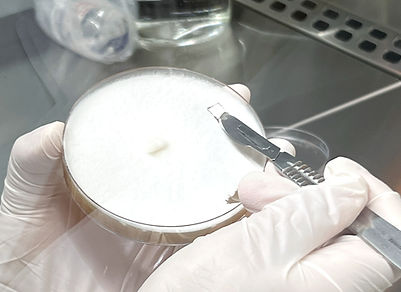
Introduction to laboratory practice, safe use of machines and sterile work with microorganisms.
As part of this Workshop, the instructed lectures will focus on laboratory security practices, the proper use of equipment and uses, and the fundamentals of biotechnology techniques applied to various areas outside of biology. The lectures will comprise both theoretical and practical components, providing participants with the opportunity to explore these techniques first-hand.
The aim of this module is to empower participants with the skills for an independent and accurate experience within a wet lab setting.
3. Materials Design for Architecture and Design
PhD Researcher Carolina Vasco Costa Delgado (BioLab Lisboa)
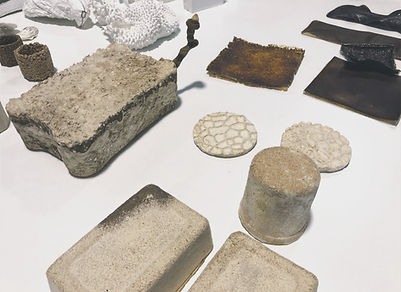
Lectures on Sustainable Materials Design for Architecture and Design and hands-on Protocols for DIY Bio-fabricating materials
Materials Design has emerged as an autonomous field by makers collaborating from different areas—as biology, architecture, and design—to develop sustainable solutions. In this module the students will be presented to the main theory of sustainable materials and differences in bio-based materials sources, techniques and applications. They will be introduced to DIY Protocols for Bio-fabricating materials.
4. Mycelium-Based Fabrication
PhD Researcher Caterina Plenzick (BioLab Lisboa)
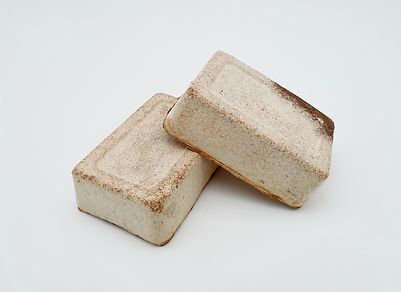
This module introduces participants to mycelium-based fabrication for architecture and design through lectures, field trips, and hands-on activities. Students will observe and sample local mushroom strains during field trips, followed by lab sessions on cloning, culture preparation, and sterile workflows. Practical activities include bio-materials 3D printing with hydrogels and composite pastes, providing insight into mycelium's material characteristics and fabrication processes.
5. Research Structure and Documentation
PhD Researchers Carolina Delgado and Caterina Plenzick (BioLab Lisboa)

Assignments during the semester start with a lecture on documentation. Students will conclude their material experiments, documenting them through photography and compiling concise textual reports. These reports will encompass the process description and their considerations, conclusions, and impressions derived from the process.
6. Digital Fabrication and Soft Robotics
Architect Rafael Calado, Researcher Guilherme Martins and Architect Carlos Roque (BioLab Lisboa)

This session focuses on practical applications of digital fabrication technologies available at BIOLAB.
Students will gain practical experience with them, focusing on how these technologies can be applied to fabricate or design with biomaterials. This module introduces advanced digital fabrication technologies, focusing on 3D printing, soft robotics, and mould construction.
7. Advanced Topics in Decision Support and Information Management
Prof. Susana Rosado (FAUL)

Participants will be introduced to advanced tools and methodologies for information management and decision-making in biomaterials research. This module provides an overview of the complexities involved in structuring and planning experimental material-based research, highlighting the importance of data collection, analysis, and strategic planning as foundational tools for addressing research challenges effectively.
8. From Ecosystems to Laboratory
Biologist João Canilho Santos, PhD Researcher Caterina Plenzick and Engineer Laura Sordini
_edited.jpg)
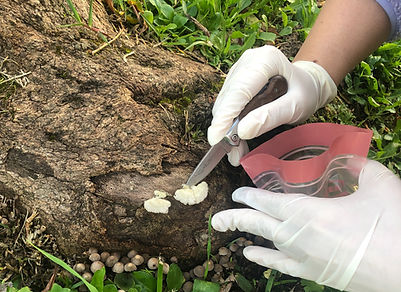
João Santos, Caterina Plenzick, and Laura Sordini will lead field trips to explore organisms like mycelium, bacteria, and algae in their natural habitats. These excursions highlight their ecological roles before cultivation in lab settings, combining theory, hands-on lab work, and immersive field experiences. Through field trips and lab sessions, participants will reflect on these organisms’ ecological roles and explore their potential applications in bio-based design.
9. Final Presentation
Prof. José Nuno Beirão (FAUL-CIAUD)

During the second half of the workshop, beginning with session 2, architecture and design students will explore how biotechnology intersects with their fields, fostering new practices, methodologies, and outcomes. This session will include a review of the practical work conducted by students since session 2.
The presentation of student work will span two days. On the first day, students will showcase their material studies, detailing the processes undertaken and presenting the outcomes alongside theoretical reflections on the interplay between biotechnology, architecture, and design.
The second day will focus on a collaborative review of the projects, involving students, lecturers, and instructors. This review will aim to develop strategies for translating experimental results into hypothetical applications for architecture and design, as well as outlining the sequence of experiments needed to validate these hypotheses.

Team

José Nuno Beirão
Professor (FAUL/CIAUD)
Degree in architecture (1989) from the Faculty of Architecture, TU Lisbon. Founder of Bquadrado Architects (1998-2010). Master’s degree in urban design (2005), at ISCTE-IUL, University Institute of Lisbon. PhD in Urbanism and Architectural engineering + Technology at TU Delft, Netherlands, in 2012. He has been the coordinator of the Design and Computation Group at FA-ULisboa since 2016. His current research interests focus on the use of parametric systems, geographic databases, and spatial analysis to investigate the measurement of urbanity parameters, urban morphology, and the development of evolutionary systems for urban design. He also explores customizable systems for social and sustainable housing, urban sprawl repair, digital design and manufacturing, urban analysis, and methods for decision-making and planning. His expertise extends to game-based participatory systems, nature-based solutions, and bio-based solutions for architecture, as well as shape grammars.

Susana Rosado
Professor (FAUL-CIAUD)
2007 Ph.D. in Statistics and Operational Research, University of Lisbon Faculty of Sciences, 1998 Master's Degree in Probability and Statistics, University of Lisbon Faculty of Sciences. Susana Rosado is an Assistant Professor at the Lisbon School of Architecture, University of Lisbon, and a researcher at CIAUD - Architecture, Urbanism and Design Research Center. Susana Rosado has developed her research in Mathematics and Statisctics applied to Architecture and Urbanism, particularly in the project Connecting Lisbon, towards more liveable cities.

Caterina Plenzick
PHD Researcher and Designer (FAUL/BIOLAB)
Caterina Plenzick is a PhD Student in Architecture at the Lisbon School of Architecture, University of Lisbon, researching mycelium-based technology for architectural applications, combining local textile waste recovery to engineer innovative fabrication methodologies. She holds an M.A. in Industrial Design (2022) from Burg Giebichenstein University of Art and Design, Germany, a B.A. in Product Design (2016) from the University of Applied Science Potsdam, Germany, and a BA in Anthropology (2008) from the University of Rome La Sapienza, Italy. A multidisciplinary designer, she co-founded Endogenous Lab in 2019, https://www.endogenous-lab.com/projects/from-dust a studio for Research and Design based in Berlin and Lisbon. Her work has been exhibited internationally and received several awards. Since 2022, she has been involved in EU-funded projects in Italy, focusing on developing circular strategies for rural communities.

Carolina Delgado
PHD Researcher and Designer (CIAUD/BIOLAB)
Carolina Delgado is a Designer, Researcher in Bio-materials and PhD Student in Design funded by FCT. Collaborator at CIAUD—Research Centre for Architecture, Urbanism and Design, and IFIMUP—Institute of Physics for Advanced Materials, Nanotechnology and Photonics.
Member REDES - Research & Education in Design.
Co-authoring, published and presented in international peer-reviewed conferences and scientific journals. As an invited teacher gives seminars on Circular Economy, Sustainable Design, and Bio-based Materials. Currently is developing her research in seaweed-based materials in BioLab Lisboa, where instruct and support experiments of undergraduate students and, assists graduates in Bio-fabricating Materials.
Ciência ID: 5A14-5419-0F3B

Rafael Calado
Architect and Head of BioLab Lisboa
Studies at FAUP, Erasmus at UPC Barcelona, and graduated from FAUTL in 1993. Private & municipal practice mainly Rehabilitation & Project Coordination.
In 2014 joins FabLab Lisboa as Coordinator, managing community, projects, programs & partnerships. Promotes the Portuguese Makers/FabLabs Network and the European Creative Hubs Network since 2015. In 2016 set the first Portuguese FabLabs Meeting and co-founded Repair Café Lisboa.
Rome Maker Faire Ambassador, Urban Arenas Fellow & Ocean Ambassador at the New European Bauhaus of the Seas Sails Program.
Head of BioLab Lisboa Head since 2022, Portugal's first Citizen Lab. A science & biomaterials research community.
Founding member of Vulca Makers Association and projects such as FabLab Porto de Mós, Real Factory Creative Hub, Coletivo-Maker Bombarda, Reviravolta Eco Hub or Prototyping & Business for the Disabled.
Has been in many international meetings & challenges promoted by Fab & FabCity Foundations, and given talks & workshops across Europe.

João Canilho Santos
Biologist (BIOLAB)
Graduated in Biology and Ecology from the Faculty of Sciences at the University of Lisbon.
In the research field, has worked in plant and animal ecology, both in terrestrial and marine ecossystems. Frequently works as a consultant for international companies in biodiversity surveys and assessments.
Simultaneously, has developed strong expertise in producing scientific content and facilitating formal and non-formal education activities for various audiences. Collaborated with renowned museum institutions in Portugal, creating scientific exhibitions and workshops.

Ana Mestre
Professor (FBAUL-DE)
Ana Mestre, born in Lisbon (1978), holds a PhD in “Sustainable Design Innovation” from Delft University of Technology. She began her work in Ecodesign and Design for Sustainability in 2000 at INETI (National Institute of Engineering, Technology, and Innovation). As a lecturer, she has taught at renowned institutions, including Delft University (NL), Nottingham Trent (UK), Parsons (USA), Tsinghua (CH), IIT Delhi (IN), IADE (PT), and the University of Porto (PT). Currently, she is a Professor at Faculdade Belas Artes, University of Lisbon, and a Senior Fellow at Loughborough University London. Ana founded SUSDESIGN and CORQUE DESIGN, developing cork-based furniture and sustainable design initiatives. She directed the BIODESIGN initiative (2019) and DESIGN FUTURES (2024) and consulted on sustainability and circular economy for the 2021 Portuguese Presidency of the EU. Her research focuses on sustainability scenarios, circular and regenerative design, biodesign, and bio-strategies for circularity.

Magda Barreira
Laboratory Technician (Polytechnic of Leiria/BIOLAB)
Magda Barreira holds a master's degree in Blue and Circular Economy and has a background in Food Engineering. Her journey began with a laboratory technician course, where she developed and refined her skills in various types of analyses, including chemical, microbiological, biochemical, and water assessments. She also gained expertise in molecular biology techniques and demonstrated a strong adherence to laboratory hygiene and safety protocols.
During her undergraduate studies, Magda focused on acquiring in-depth knowledge of the food industry, particularly in ensuring food quality and safety, as well as innovating and improving food products. For her master's research, she concentrated on valorising by-products and exploring innovative solutions to reduce plastic usage.

Guilherme Martins
Designer and Independent Researcher (Biolab)
Guilherme Martins is an artist, multidisciplinary designer, and independent researcher with over a decade of experience in technological transformation, physical computing, interaction design, and product design. He has developed several interactive installations for museums, festivals, and corporate events.
He actively participates in the dissemination of knowledge, regularly holding workshops on physical computing, music, and programming, promoting learning and technological innovation, and also including younger audiences in the world of programming and digital arts.
He is passionate about digital arts, namely the creation of visuals for live performances, and recently participated in the Glimmer concert, a joint work between Micro Audio Waves and Rui Horta.
In 2011, Guilherme co-founded ArticaCC, a pioneering company in Creative Computing, where together with his team, he developed interactive solutions for marketing, museums, exhibitions, and shows. International collaborations with Victory Hill Exhibitions in the Avengers and Transformers travelling exhibitions in China, Europe, and the USA stand out. Other notable clients include Adidas, Heineken, Pfizer, Control, Nestlé, and the Calouste Gulbenkian Foundation, among others.
Guilherme is constantly looking for innovative projects that challenge his limits and establish new creative and technological frontiers for him.

Carlos Roque
Architect (Biolab)
Carlos has a degree in Architecture, from FA UL in 1987 and holds a Certificate of Pedagogical Competence (former CAP) since 2010. He has been a Senior Technician at Lisbon City Council since 1994 and a collaborator at BioLab Lisboa as a Design Engineer since 2024.
He was a former Managing Partner at Obra 7, Project Studio, and Project Studio Chief at Farmalaboptica, Industrial Furniture & Equipment.
Taught "Computer Graphics" under the FOCO Program at Centro Calvet de Magalhães and the FORTECA Program at Marquês de Pombal High School (Lisboa) he also taught "Introduction to Drawing (classes with Model)" at the National Society of Fine Arts in Lisbon
Has specialised skills and diverse achievements in the areas of: architecture, sculpture, technical and artistic drawing, graphic arts, and as an instructor in similar technical areas

Alice Araujo Marques de Sá
PhD Researcher and Designer (FAUL/ENSAPLV/FBAUL/BIOLAB)
Alice Araujo Marques de Sá is a Design Ph.D. student at the School of
Architecture, University of Lisbon (FAUL), under co-supervision with the École
Nationale Supérieure d’Architecture Paris-La Villette (ENSAPLV), and Faculty of
Fine arts of the University of Lisbon (FBAUL). She is currently researching the
potential of biomimicry and bioreceptivity for designing façade modules
compatible with mosses and lichens. Alice holds a Master’s degree in Design, a
Specialization in Sustainable Architectural and Urban Environmental
Rehabilitation, and a Bachelor’s degree in Product and Graphic Design, all from
the University of Brasília, Brazil. Her main areas of interest encompass
biomimicry, biodesign, biophilia, ecodesign, sustainability, and bioclimatic
architecture. Alice is a resident researcher at BioLab Lisboa, where she
develops experimentation on bioreceptivity and conducts other biomaterial
experimentations with kombucha and natural fiber papermaking.
Ciência ID: 841A-DDFB-A6AF
https://linktr.ee/alicearaujoms
@marquesdesa.art
%20(1)_edited.jpg)
Carla Costa Pereira
Professor
1974: was born in Angola
1998: graduated in Fashion Design at the Faculty of Architecture of the Technical University of Lisbon,
with 16 values
1997-1998: worked as a fashion industrial designer at Camilo Pinto SA, following up on Peter Murray's
menswear collections, The World Apart, and Lightning Bolt womenswear collections.
1998-2007: worked as a senior designer at the Portuguese company Tricana SA, developing works in the
textile weaving area and collaborating with the marketing department to consolidate the company's
corporate and external image.
2006: concluded a master’s in design and marketing – textile option at the School of Engineering at the
University of Minho, with the thesis theme "The Portuguese Tapestry and its Production Techniques", with
a very good rate
2013: PhD in Design at the Faculty of Architecture of the University of Lisbon with the thesis theme
"Sustainability in Clothing Design", with a very good laude rate
2003-2013- As Invited Assistant, she was teaching at the Faculty of Architecture of the University of
Lisbon in the fashion degree and fashion master's degree courses in the subjects related to fashion,
technologies, textile materials and dressmaking.
2013 to date – As Assistant Professor, she has been teaching at the same courses combined with the
knowledge in sustainability.
As member of CIAUD and has been authored or co-authored articles in her research area, addressing
issues related to sustainable fashion design methodologies, the processing and transformation of textile
waste into valuation proposals, sustainable materials, and the analysis of fashion wardrobe consumer
behavior.
She was the scientific supervisor for the PhD in Design: - Thermal camouflage and fashion design, public
examination on 09/07/2020, very good with laude

Cristina Carvalho
Professor
1993 - Graduated in Textile Engineering (Textile Production) by University of Beira
Interior, Covilhã / Portugal.
1999 - MSc in Biotechnology/Biochemical Engineering from IST/UTL, Lisbon /
Portugal.
2006 - PhD in Biotechnology at I.S.T./U.T.L., on topic: Development of a System of
Biodegradation Oxic - Anoxic for Textile Wastewater, Lisbon/Portugal on 21/12/2006.
2009 - Post Graduated in Neurosciences of the Faculty of Medicine of Universidade de
Lisboa.
2025 - Habilitation in Design, Faculty of Architecture of ULisboa
1995 to 2006 – Assistant of the Faculty of Architecture of ULisboa
2006 to date – Assistant Professor of the Faculty of Architecture of ULisboa
2007 to 2018 – Member of Scientific Council of Faculty of Architecture of ULisboa
2012 to date – Assistant Professor on Master Course of Apparel and Textile Design of
ESART/IPCB and of the Faculty of Architecture of ULisboa.
1999-2006 - Member of ENVERG (Environment Research Group) IBB - IST/UTL
2007 to date - Effective member of CIAUD (Research Centre for Architecture,
Urbanism and Design), Faculty of Architecture of ULisboa.
2021-2023 – Scientific Coordinator of ID&T Project 68924 – BIOCOLOUR (ANI –
Portugal 2020)
2008-2012 - Coordinator of the Master in Fashion Design of Faculty of Architecture of
ULisboa
2009 to date - Scientific Evaluator ANI (National Innovation Agency)
2007 to date - Scientific Supervisor at the PhD in Design:
- Design of Sports Clothing in Straight Knit Adapted to the Senior User, public
examination on 13/07/2023, Unanimously Approved.
- Dynamic and Interactive Costume Design for Artistic Performance, public
examination on 15/05/2019, Unanimously Approved with Very Good and Distinction.
- Contributions of Design in the Reframing of Bobbin Lace in Peniche, public
examination on 08/04/2019, Unanimously Approved with Very Good and Distinction.
- The importance of biotechnology application in the textile industry: Natural textile
dyes, public examination on 29/04/2016, Very Good with Laude.
- New Materials and Techniques Applied to White Castle Embroidery Design in Textiles
and Clothing, public examination on 12/06/2012, Very Good with Laude.
- Sustainability in Apparel Design, public evidence in 07/03/2013, Very Good with
Laude.
Co -Supervisor of the Scientific Research Project PhD in Design:
- Intelligent Clothing as a Tool to Design of Sports Performance, public evidence in
18/10/2012, Very Good with Laude.
- Executive member of 1 st International Textile Design Conference 2017
- Executive member of 2 nd International Textile Design Conference 2019
- Executive member of 3 rd International Textile Design Conference 2024
Research Areas of Interest: Textile Materials, Textile Dyes, Sustainable Textiles and
Apparel, Biotechnology, Nanotechnology, EcoDesign.